
FGV 2024.1Questão 34de 60According to the information in the article, the research performed by Tracy Langkilde and her colleagues most likely
InglêsInterpretação de texto
Texto das questões 31 a 34
Texto para as perguntas de 31 a 34
EATING FOR IMMUNITY
By
Brittany Steff
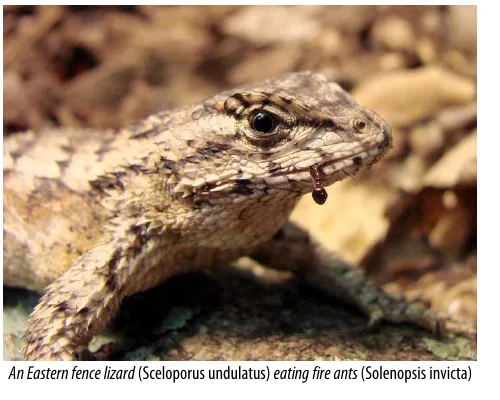
1 Eastern fence lizards live in dry pine forests, around houses and barns, and, as their name implies, along fences in most of the eastern states south of the Ohio River Valley [na fronteira do meio-oeste e sul dos EUA]. Their colors and patterning mimic wood and bark [casca de árvore], enabling them to hide from birds, their primary predators. But fire ants from South America are slowly moving northward in the United States and posing [representando] a new threat to the lizards, which are a source of food.
2 Ecologist Tracy Langkilde and colleagues in her laboratory at Pennsylvania State University have long studied fence lizard ecosystems and have found that the way fence lizards – individuals and populations – are responding to this new threat offers a fascinating look into a species’ response to rapid environmental change.
3 “The fire ants attack the lizards,” said Catherine Tylan, the study’s lead author. “Where the fire ants live, fence lizards have shorter lifespans, and rougher lives. They have had to change how they react behaviorally to [this new] predator…their limbs have even changed to be longer so they can run faster.”
4 The research shows that, in areas rife [cheias] with fire ants, lizards have changed other defensive strategies. Rather than freezing to camouflage, they now thrash [mexem vigorosamente] their bodies and twitch [estremecem] their limbs before fleeing, much as a human would when attacked by a fire ant. And the lizards have started eating the ants.
5 Consuming fire ants, of course, eliminates those individuals from threatening again. But the research also indicates that eating fire ants stimulates lizard immune systems, making them more resistant to bites in the future. Tylan explained, “We see very clear differences in immune profiles between communities where the fire ants are present and where they’re absent. By eating the fire ants, the lizards may be helping themselves immunologically to defend against stings.”
Adapted from Natural History, Dec.2022 – Jan.2023.
According to the information in the article, the research performed by Tracy Langkilde and her colleagues most likely supports which of the following?
- Alternativa A: There is currently no way to stop the northward migration of fire ants in the U.S.
- Alternativa B: The antagonistic relationship between eastern fence lizards and fire ants is too new to provide conclusive scientific data.
- Alternativa C: Because of fire ant predation, eastern fence lizards are evolving into two separate and distinct species.
- Alternativa D: Eastern fence lizards have become the main source of food for fire ants.
- Alternativa E, a correta: Even though fire ant venom can severely debilitate eastern fence lizards, they seem to protect their health by eating fire ants.Resposta
A questão pede o que a pesquisa de Tracy Langkilde e colegas provavelmente sustenta.
Reunindo os dois lados da pesquisa:
O parágrafo 3 mostra o custo: onde há formigas, os lagartos vivem menos e têm vidas mais duras, ou seja, o veneno os debilita seriamente.
O parágrafo 5 mostra o ganho: comer as formigas estimula o sistema imunológico e os torna mais resistentes a picadas futuras. Tylan é explícita: "By eating the fire ants, the lizards may be helping themselves immunologically to defend against stings."
Juntando:
A conclusão que a pesquisa sustenta é a soma dos dois: mesmo o veneno sendo capaz de debilitar gravemente os lagartos, eles parecem proteger a própria saúde comendo as formigas. É o paradoxo que dá título ao artigo, comer pela imunidade.
Analisando as demais alternativas:
A alternativa sobre não haver como parar a migração das formigas não é objeto da pesquisa.
A alternativa que diz que a relação é nova demais para dar dados conclusivos contraria o artigo, que apresenta resultados claros ("very clear differences in immune profiles").
A alternativa sobre os lagartos se dividirem em duas espécies distintas vai muito além do texto: mudança de membros e de comportamento não é especiação.
A alternativa que faz do lagarto a principal fonte de alimento das formigas inverte os papéis: o texto diz que as FORMIGAS viraram fonte de alimento dos lagartos.
Conferindo a alternativa:
A conclusão que combina o veneno debilitante com a proteção obtida ao comer as formigas corresponde à alternativa E.
Confere com o gabarito oficial da FGV. Ver o caderno da banca