
FGV 2024.1Questão 38de 60The information in the article most likely supports which of the following?
InglêsInterpretação de texto
Texto das questões 38 a 40
Texto para as perguntas de 38 a 40
IS POVERTY A CHOICE?
By
Jean-Marie Valheur
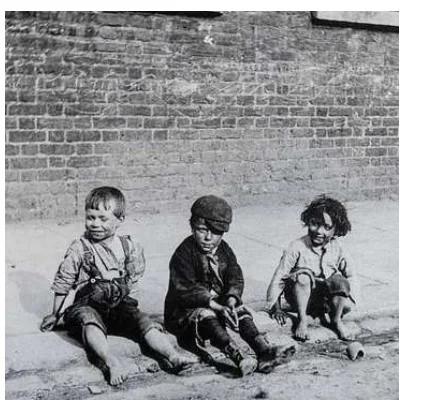
1 A sad little historical fact? The oldest man ever to be executed by hanging [por enforcamento] in the United Kingdom was a man named Samuel Crowther. He was 71 years old.
2 Crowther was an elderly shoemaker who couldn’t make ends meet [fazer face às despesas]. He went into the garden of a man named John Willis, to take some fruit from one of his trees. Willis spotted the elderly thief and confronted him.
3 In the ensuing struggle, the elderly fruit thief pulled out a knife, fatally [com a morte como resultado] stabbing Willis. Crowther was caught the very same morning and sentenced to hang [condenado à forca]. His only daughter testified against him. It was the year 1888 and Crowther was lame [manco], frail [fraco] and had to walk to the gallows [a forca] assisted by a cane. He didn’t have a choice… he worked until he couldn’t anymore. Then he stole food, and he was willing to die for some apples.
4 I cannot imagine the point where one is willing to die for some fruit as being much of a “choice.” Rather, I would say it’s a choice forced upon people by desperation. I’m allergic to the reasoning that people choose to be poor… almost no one does. Cruel fate decides for most of us and many people never make it out of the dark hole they’re in, no matter how hard they try and no matter how hard they work.
Adapted from Quora, March 3, 2024.
The information in the article most likely supports which of the following?
- Alternativa A, a correta: While Samuel Crowther may not have chosen poverty, he did make the decisions to steal from and defend himself against John Willis.Resposta
- Alternativa B: While Samuel Crowther may not have chosen poverty, some of his early decisions made poverty inevitable.
- Alternativa C: When Samuel Crowther entered John Willis’s garden, it was the first time in his life that he had been forced to steal to survive.
- Alternativa D: John Willis was obviously a younger, stronger man who intended to hurt Samuel Crowther.
- Alternativa E: The story of Samuel Crowther shows that, for the United Kingdom’s working class in those days, old age inevitably meant poverty.
A questão pede a afirmação mais sustentada pelo texto sobre Samuel Crowther.
Separando o que ele não escolheu do que ele escolheu:
O parágrafo 4 é claro sobre a pobreza: o autor não a vê como escolha, e sim como algo imposto pelo desespero.
Mas os parágrafos 2 e 3 narram duas ações deliberadas dele: entrou no jardim de John Willis para pegar frutas, e, na luta que se seguiu, sacou uma faca. As duas coisas são decisões, roubar e se defender, ainda que tomadas sob desespero.
Juntando as duas coisas:
Crowther pode não ter escolhido a pobreza, mas tomou as decisões de roubar de Willis e de se defender dele. É a formulação exata da alternativa correta, e ela não contradiz a tese do autor: a pobreza é imposta, os atos dentro dela são escolhas.
Analisando as demais alternativas:
A alternativa sobre decisões precoces terem tornado a pobreza inevitável contraria a tese do texto, que atribui a pobreza ao destino cruel, não a más escolhas.
A alternativa que afirma ter sido a primeira vez que ele roubou não tem apoio: o texto diz que ele "worked until he couldn't anymore. Then he stole food", sem dizer quantas vezes.
A alternativa que descreve Willis como mais jovem, mais forte e com intenção de ferir inventa três informações que o texto não traz.
A alternativa que diz que a velhice significava INEVITAVELMENTE pobreza para a classe trabalhadora britânica generaliza a partir de um único caso, e o texto não faz essa afirmação.
Conferindo a alternativa:
A afirmação que separa a pobreza não escolhida das decisões tomadas corresponde à alternativa A.
Confere com o gabarito oficial da FGV. Ver o caderno da banca