
FGV 2026.1Questão 44de 60In sentence 2, the phrase '…he developed a reputation as a one-man disaster area' most likely refers to which of the
InglêsVocabulário no contexto
Numeração da prova tipo 1.
Texto das questões 44 e 45
TSAR ALEXANDER II
By Mark Seaman
(Historical Note: Serfdom [servidão] was a feudal system where laborers known as serfs [servos] were legally bound to work a lord's estate, trading their freedom of movement and labor for protection and a small plot of land. They were not personal property like slaves, but they could not leave the land, often passing this involuntary, hereditary status to their children.)
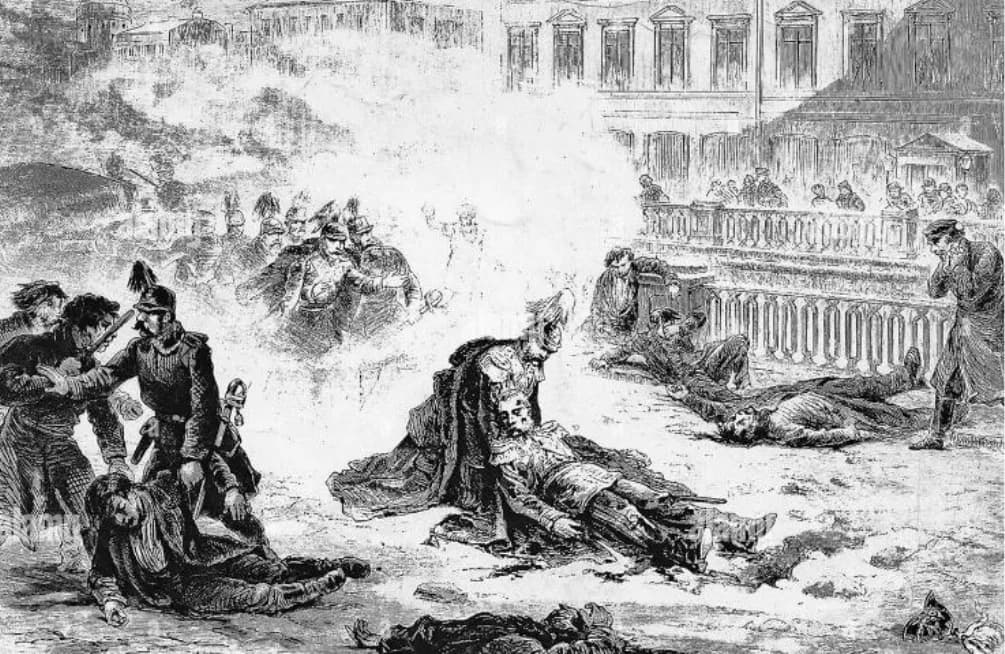
Though he was known as “Alexander the Liberator” for having abolished serfdom in the Russian Empire in 1861, there were so many attempts to assassinate Tsar Alexander II that he developed a reputation as a one-man disaster area. To be anywhere in his vicinity was felt to be so hazardous [perigosa] that the citizens of St. Petersburg would not buy tickets for the opera unless they were given an assurance that the Tsar would not be attending the performance. Finally, in March 1881, the assassins succeeded. A bomb was thrown at the Imperial carriage and exploded, injuring a child and a Cossack guardsman but leaving the Tsar unharmed. Alexander ordered his carriage to stop and went to comfort the wounded man, but then a second bomb was flung. This time twenty spectators were killed and the Tsar was almost blown in half. He died about an hour later.
Adapted from the book The Rest is History.
In sentence 2, the phrase '…he developed a reputation as a one-man disaster area' most likely refers to which of the following?
- Alternativa A, a correta: Just the appearance of the Tsar at any public space could make people there fear that terrible violence might soon occur.Resposta
- Alternativa B: On one occasion, two different revolutionary factions tried to kill the Tsar on the same day.
- Alternativa C: By abolishing serfdom, the Tsar ruined the Russian economy.
- Alternativa D: The presence of the Tsar and his family at an opera could bankrupt an opera house.
- Alternativa E: The Tsar simply could not believe that he was so unpopular.
O que a questão pede:
O sentido de "he developed a reputation as a one-man disaster area" (ele ganhou fama de ser, sozinho, uma zona de desastre).
Onde está no texto:
A própria frase explica a expressão: houve tantas tentativas de assassinato que estar perto do czar era considerado perigoso. O exemplo vem em seguida: os moradores de São Petersburgo só compravam ingresso para a ópera se tivessem a garantia de que o czar não iria.
Por que é a letra A:
A simples presença do czar num lugar público fazia as pessoas temerem que uma violência terrível acontecesse. É o que explica a história da ópera.
Por que as outras não:
- B fala de duas facções no mesmo dia. O texto fala de duas bombas, sem dizer que eram de grupos diferentes.
- C fala da economia arruinada pelo fim da servidão. O texto não fala de economia.
- D fala de falência da ópera. O problema era o medo do público, não o dinheiro.
- E diz que o czar não acreditava ser impopular. O texto não fala do que ele pensava.
A armadilha:
A letra D usa a ópera, que está no texto, mas troca o motivo: as pessoas não iam por medo, não porque a ópera quebraria. A expressão "disaster area" fala de perigo para quem está em volta.
Confere com o gabarito oficial preliminar da FGV. Ver o caderno da banca