
FGV 2026.1Questão 35de 60The information in the article most likely supports all of the following except
InglêsInterpretação de texto
Numeração da prova tipo 1.
Texto das questões 35 a 37
LISZTOMANIA: FOR THE LOVE OF MUSIC
By Megan Szostak
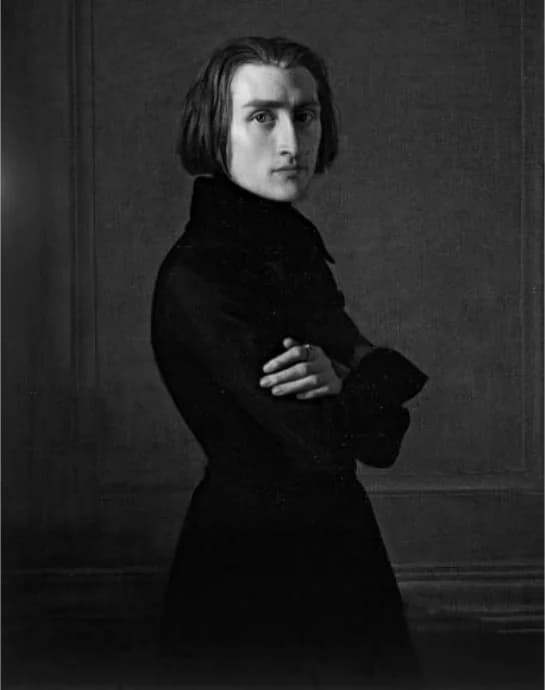
Franz Liszt, oil on canvas by Henri Lehmann, 1840; in the Carnavalet Museum, Paris.
(Historical Note: 19th-century Hungarian pianist and composer Franz Liszt is widely considered the first "rock star" due to the extreme, hysterical adoration of his fans – a phenomenon known as “Lisztomania " – which included fainting, fighting over his discarded gloves, and tearing at his clothing.)
Growing up, I hated music. I had been exposed to the popular music of the early 2000s before anything else, and if you can remember the Miley Cyrus hits or other millennial-teen music that permeated through the public-school system and into the ears of impressionable youth during that era [época], my original sentiments towards music will seem justified. After spending nearly eight years believing that I would live a life without melody, I discovered classical music. Suddenly, I didn’t feel as though the performer was force-feeding a message to me through shallow lyrics but rather was giving me an opportunity to interpret the melodies as I pleased. The complexity of classical music enchanted me, and the breadth [amplitude] of styles gave me insight into the scope of human musical production, which spanned so far beyond Britney Spears. This revelation led to the biggest paradigm shift I have ever experienced: I discovered that my life would never be complete without music. Lisztomania had taken possession of me.
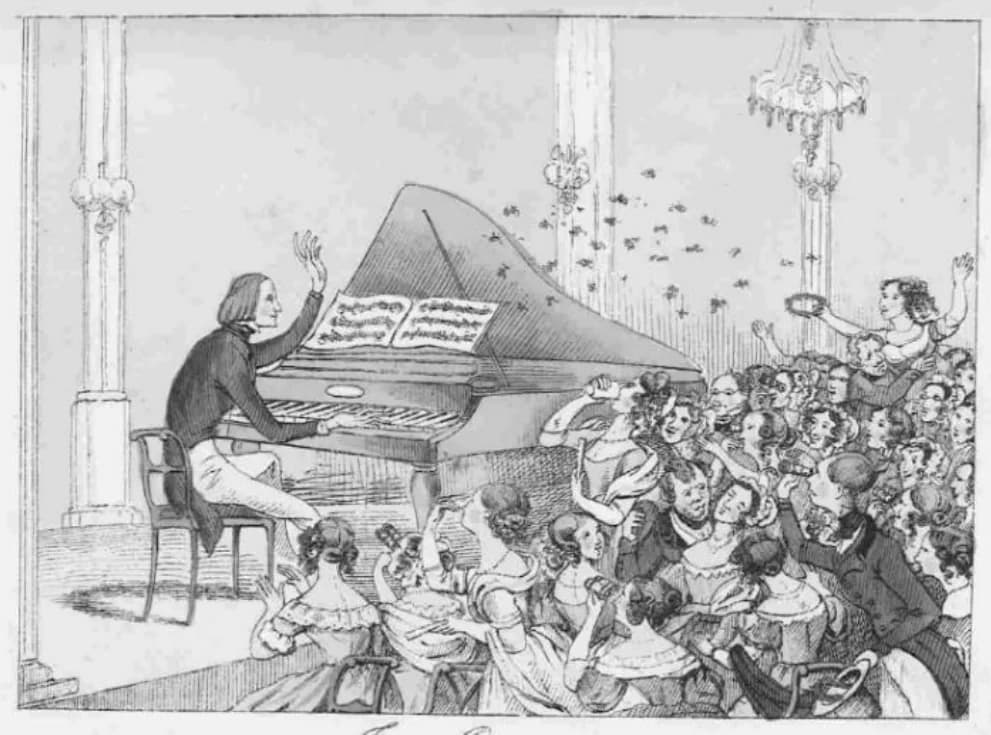
An 1842 cartoon by Theodor Hosemann showing 'Lisztomania', the hysteria of the audience when the virtuoso piano player and composer Franz Liszt (1811-1886) performed in public.
The term was inspired by the phenomenon of the brilliant Hungarian composer and piano virtuoso Franz Liszt. Just as the Beatles and Beatlemania took fans by storm [conquistaram os fãs de forma súbita e avassaladora] in the 1960s, Liszt provoked a similar sensation over a century earlier. When he was on a concert tour of Europe in the 1840s, women went wild, some fainting during the performances of the young, rugged [de visual viril e charmoso] pianist, others trying to cut locks [mechas] of his hair. To describe this behavior, German journalist Heinrich Heine coined the term “Lisztomania.” And doctors of that time began treating Lisztomania not only as an intense passion for Franz Liszt himself, but also as an insatiable love of music. And that double meaning has survived to this day. I am proof of that.
Adapted from The Tufts Daily, February 5, 2019
The information in the article most likely supports all of the following except:
- Alternativa A: The author believes that the popular music of her childhood did not respect her desire for intellectual freedom.
- Alternativa B: Discovering classical music changed the author's life more than anything before or since.
- Alternativa C: The author at one point believed that music had nothing of value to offer her.
- Alternativa D: The author at one believed that a life without music was not only possible but probably desirable.
- Alternativa E, a correta: The author attended a public school that made absolutely no attempt to introduce the students to high culture.Resposta
Atenção ao comando: a questão está invertida.
"Supports all of the following except" significa que quatro alternativas são sustentadas pelo texto e uma não é. A resposta é a que sobra sem respaldo, e, como as outras quatro são verdadeiras, marcar uma delas é o erro mais provável.
O método: buscar a passagem que confirma cada afirmação. A que não tiver passagem é a resposta.
Etapa 1. Confirmando as quatro sustentadas:
A) "The author believes that the popular music of her childhood did not respect her desire for intellectual freedom."
A frase descreve o que ela sentiu ao descobrir a música clássica, e, por contraste, o que a popular fazia: empurrava uma mensagem por meio de letras rasas, sem lhe deixar espaço de interpretação. É exatamente a falta de liberdade intelectual. Sustentada.
B) "Discovering classical music changed the author's life more than anything before or since."
"A maior mudança de paradigma que já experimentei" cobre tanto o antes quanto o depois. Sustentada.
C) "The author at one point believed that music had nothing of value to offer her."
Duas palavras bastam. Sustentada.
D) "The author at one [point] believed that a life without music was not only possible but probably desirable."
"Possível" está em "believing that I would live", ela contava com isso. "Provavelmente desejável" está em "I hated music": quem odeia algo não lamenta viver sem. Sustentada.
Etapa 2. A alternativa sem respaldo:
E) "The author attended a public school that made absolutely no attempt to introduce the students to high culture."
A única menção à escola no texto é esta:
O que essa frase diz e o que não diz:
| A frase afirma | A alternativa afirma |
|---|---|
| música pop circulava pelo sistema escolar público | a escola não fez esforço algum para apresentar alta cultura |
| a autora estudou em escola pública | a escola falhou completamente nesse aspecto |
O texto descreve o que estava presente (música pop entre os jovens). Não diz nada sobre o que a escola ofereceu ou deixou de oferecer. E a expressão "absolutely no attempt" é um absoluto categórico, o tipo de afirmação que exigiria evidência explícita.
Note ainda um detalhe: a música pop "permeated through the public-school system", ou seja, atravessou o ambiente escolar, circulando entre os alunos. Isso descreve a cultura dos estudantes, não o currículo da instituição.
Etapa 3. A regra geral:
Em questões do tipo "all of the following except", os absolutos são o primeiro lugar a olhar. Palavras como absolutely, no, never, all, only, always exigem confirmação literal no texto, e raramente a têm.
| Alternativa | Passagem que a sustenta | Veredito |
|---|---|---|
| A | "force-feeding a message [...] shallow lyrics" | sustentada |
| B | "the biggest paradigm shift I have ever experienced" | sustentada |
| C | "Growing up, I hated music" | sustentada |
| D | "believing that I would live a life without melody" | sustentada |
| E | nenhuma | é a resposta |
Analisando cada alternativa:
A) Incorreta como resposta, pois é sustentada: o contraste com "force-feeding a message through shallow lyrics" mostra que a música popular não lhe deixava liberdade interpretativa.
B) Incorreta como resposta, pois é sustentada: "the biggest paradigm shift I have ever experienced".
C) Incorreta como resposta, pois é sustentada: "Growing up, I hated music".
D) Incorreta como resposta, pois é sustentada: ela passou quase oito anos acreditando que viveria sem música, e a odiava.
E) Correta como resposta. O texto apenas registra que a música pop circulava pelo sistema escolar público; nada diz sobre a escola ter ou não tentado apresentar alta cultura, e "absolutely no attempt" é um absoluto sem qualquer base no artigo.
Conferindo a alternativa:
O artigo diz que a música pop circulava na escola pública, mas nunca afirma que a escola não tentou apresentar alta cultura, alternativa E.
Confere com o gabarito oficial preliminar da FGV. Ver o caderno da banca