
FGV 2025.2Questão 31de 60According to the information in the passage, which of the following most likely best describes what happened in the
InglêsInterpretação de texto
Numeração da prova tipo 1.
Texto das questões 31 e 32
DO FAMOUS PEOPLE LOVE ANONYMITY? By Jean-Marie Valheur
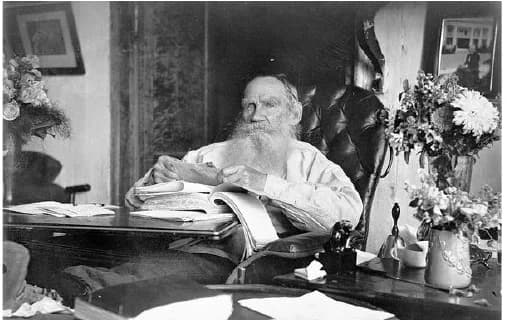
(Historical Note: Born into an old, aristocratic family, Count Lev Nicolayevich Tolstoy (September 9, 1828 – November 20, 1910), usually referred to in English as Leo Tolstoy, was a Russian writer. He is regarded as one of the greatest and most influential authors of all time. His War and Peace (1869), Anna Karenina (1878), and Resurrection (1899), which is based on his youthful sins, are often cited as pinnacles of realist fiction and three of the greatest novels ever written.)
When the famous Russian author Count Leo Tolstoy was already an old man, he once undertook a travel by train. He then saw a woman calling for her husband, who had gone to the buffet at the station, being hungry. Now their train was about to depart again. The woman approached Tolstoy, believing him to be just some old hobo [um trabalhador itinerante, sem-teto e muito pobre]. “Old man, kindly fetch [favor buscar] my husband from the buffet? Here, have this penny as a reward for your troubles.” She pressed a coin in his hand and, delighted, Tolstoy went and fetched her husband for her. When Tolstoy returned, some people began to recognize the famous author. The rich woman was rather embarrassed, and begged Count Tolstoy to return the coin to her, afraid that by insisting that he accept the penny she had forced him to demean himself… He refused, smiling, and told her that he would hold on to the coin because “It is the only money I ever made doing honest work!” Tolstoy was delighted to be just another old man, a vagrant [vagabundo], a bum [mendigo] – in short, to be someone’s servant for five minutes instead of the big, important writer of renown. He cherished [estimou, prezou] his five minutes of anonymity dearly. Many famous people are like this. But few get the opportunity, nowadays.
Adapted from an essay in Quora, April 30, 2025
According to the information in the passage, which of the following most likely best describes what happened in the train station?
- Alternativa A: Traveling incognito, Tolstoy had entered the train station’s buffet when a rich woman asked him to accompany her to find her husband.
- Alternativa B, a correta: Though he had been mistaken for someone of little importance, Tolstoy regarded the situation in the train station as a charming adventure.Resposta
- Alternativa C: Not knowing who Tolstoy was, a rich woman treated him in an arrogant and condescending manner.
- Alternativa D: Tolstoy had to interrupt his meal at the train station’s buffet in order to help a rich woman find her husband.
- Alternativa E: Some people at the train station severely criticized the rich woman for her ignorance.
A questão pede a descrição mais provável do que aconteceu na estação de trem.
O que o texto conta:
Quem tinha ido ao bufê era o marido: "her husband, who had gone to the buffet at the station, being hungry" (o marido dela, que tinha ido ao bufê da estação por estar com fome). A mulher confunde Tolstói com um pobre, "believing him to be just some old hobo" (achando que ele era só um velho andarilho sem-teto), e pede: "Old man, kindly fetch my husband from the buffet?" (velho, faça o favor de buscar meu marido no bufê?).
Como Tolstói viveu a situação:
"Delighted, Tolstoy went and fetched her husband for her" (encantado, Tolstói foi buscar o marido dela). O autor resume: "Tolstoy was delighted to be just another old man" (Tolstói ficou encantado por ser só mais um velho) e "He cherished his five minutes of anonymity dearly" (ele prezou muito seus cinco minutos de anonimato).
Conferindo a alternativa:
A alternativa A está incorreta. Ela diz que Tolstói, viajando incógnito, tinha entrado no bufê quando a mulher pediu que ele a acompanhasse para achar o marido. Quem estava no bufê era o marido ("who had gone to the buffet", que tinha ido ao bufê), e a mulher não pediu companhia: pediu que Tolstói fosse buscá-lo ("fetch my husband", buscar meu marido).
A alternativa B está correta. Ela diz que, embora confundido com alguém de pouca importância, Tolstói viu a situação como uma aventura encantadora. É o que o texto mostra: ele foi tomado por um "old hobo" (velho sem-teto) e ficou "delighted" (encantado), a ponto de prezar ("cherished") aqueles cinco minutos.
A alternativa C está incorreta. Ela diz que a mulher, sem saber quem ele era, o tratou com arrogância e condescendência. Ela pediu por favor ("kindly fetch", faça o favor de buscar), ofereceu uma moeda "as a reward for your troubles" (como recompensa pelo incômodo) e, ao descobrir quem ele era, ficou "rather embarrassed" (bastante constrangida). Não há arrogância no texto.
A alternativa D está incorreta. Ela diz que Tolstói teve de interromper a refeição no bufê para ajudar a mulher. Quem estava com fome e foi ao bufê era o marido ("being hungry", por estar com fome); o texto não diz que Tolstói estava comendo.
A alternativa E está incorreta. Ela diz que algumas pessoas na estação criticaram duramente a mulher pela ignorância. O texto diz apenas que "some people began to recognize the famous author" (algumas pessoas começaram a reconhecer o famoso escritor); ninguém critica a mulher.
Tolstói confundido com um pobre e encantado com isso corresponde à alternativa B.
Confere com o gabarito oficial preliminar da FGV. Ver o caderno da banca