
FGV 2025.2Questão 32de 60The information in the passage most likely supports which of the following ideas?
InglêsInterpretação de texto
Numeração da prova tipo 1.
Texto das questões 31 e 32
DO FAMOUS PEOPLE LOVE ANONYMITY? By Jean-Marie Valheur
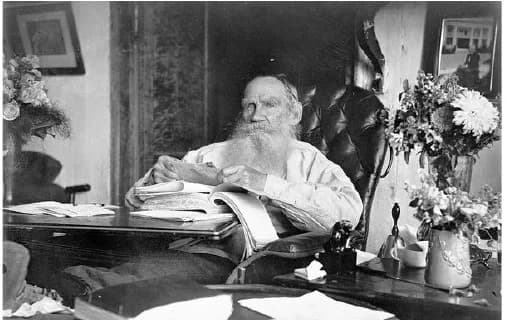
(Historical Note: Born into an old, aristocratic family, Count Lev Nicolayevich Tolstoy (September 9, 1828 – November 20, 1910), usually referred to in English as Leo Tolstoy, was a Russian writer. He is regarded as one of the greatest and most influential authors of all time. His War and Peace (1869), Anna Karenina (1878), and Resurrection (1899), which is based on his youthful sins, are often cited as pinnacles of realist fiction and three of the greatest novels ever written.)
When the famous Russian author Count Leo Tolstoy was already an old man, he once undertook a travel by train. He then saw a woman calling for her husband, who had gone to the buffet at the station, being hungry. Now their train was about to depart again. The woman approached Tolstoy, believing him to be just some old hobo [um trabalhador itinerante, sem-teto e muito pobre]. “Old man, kindly fetch [favor buscar] my husband from the buffet? Here, have this penny as a reward for your troubles.” She pressed a coin in his hand and, delighted, Tolstoy went and fetched her husband for her. When Tolstoy returned, some people began to recognize the famous author. The rich woman was rather embarrassed, and begged Count Tolstoy to return the coin to her, afraid that by insisting that he accept the penny she had forced him to demean himself… He refused, smiling, and told her that he would hold on to the coin because “It is the only money I ever made doing honest work!” Tolstoy was delighted to be just another old man, a vagrant [vagabundo], a bum [mendigo] – in short, to be someone’s servant for five minutes instead of the big, important writer of renown. He cherished [estimou, prezou] his five minutes of anonymity dearly. Many famous people are like this. But few get the opportunity, nowadays.
Adapted from an essay in Quora, April 30, 2025
The information in the passage most likely supports which of the following ideas?
- Alternativa A, a correta: Apparently, being famous in today’s world can be even more problematic than it was in the past.Resposta
- Alternativa B: If he had not succeeded as a writer, Tolstoy would have been very happy to be “just another old man, a vagrant, a bum.”
- Alternativa C: Tolstoy sought anonymity in part because he was ashamed of being a wealthy aristocrat in the Russian Empire.
- Alternativa D: That brief moment of being someone’s “servant” in a train station was the most fun Tolstoy had had in years.
- Alternativa E: Nowadays, the proliferation of cameras and social media make it impossible for famous people to find anonymity.
A questão pede a ideia que o texto sustenta.
O fecho do texto:
Depois de contar o episódio de Tolstói, o autor generaliza: "Many famous people are like this. But few get the opportunity, nowadays." (Muitos famosos são assim. Mas poucos têm essa oportunidade hoje em dia.) Tolstói, no passado, ainda conseguia passar cinco minutos anônimo; hoje, segundo o autor, poucos famosos conseguem. Logo, a fama hoje parece pesar mais do que pesava antes.
Conferindo a alternativa:
A alternativa A está correta. Ela diz que, aparentemente, ser famoso hoje pode ser ainda mais problemático do que era no passado. O "nowadays" (hoje em dia) contrapõe o presente à época de Tolstói: hoje é mais difícil escapar da fama. E a alternativa é cautelosa ("apparently", aparentemente; "can be", pode ser), na medida do que o texto permite.
A alternativa B está incorreta. Ela diz que, se não tivesse feito sucesso como escritor, Tolstói teria ficado muito feliz em ser "só mais um velho, um vagabundo, um mendigo". O prazer dele vinha justamente do contraste com a fama: ser servo de alguém por cinco minutos "instead of the big, important writer of renown" (em vez do grande e importante escritor renomado). O texto não diz que ele gostaria de viver como mendigo.
A alternativa C está incorreta. Ela diz que Tolstói buscava o anonimato em parte por vergonha de ser um aristocrata rico. A nota histórica cita a família aristocrática e "his youthful sins" (seus pecados da juventude), mas só para falar do romance Ressurreição; em nenhum momento liga isso a vergonha ou à busca de anonimato.
A alternativa D está incorreta. Ela diz que aquele breve momento como "servo" foi a maior diversão de Tolstói em anos. O texto diz que ele ficou "delighted" (encantado), mas não compara com outros momentos da vida dele.
A alternativa E está incorreta, e é a mais tentadora. Ela diz que hoje a proliferação de câmeras e redes sociais torna impossível para os famosos encontrar anonimato. O texto não fala de câmeras nem de redes sociais, e diz "few get the opportunity" (poucos têm a oportunidade): poucos não é nenhum, então "impossible" (impossível) vai além do texto.
A ideia de que a fama hoje pode ser mais problemática que no passado corresponde à alternativa A.
Confere com o gabarito oficial preliminar da FGV. Ver o caderno da banca